
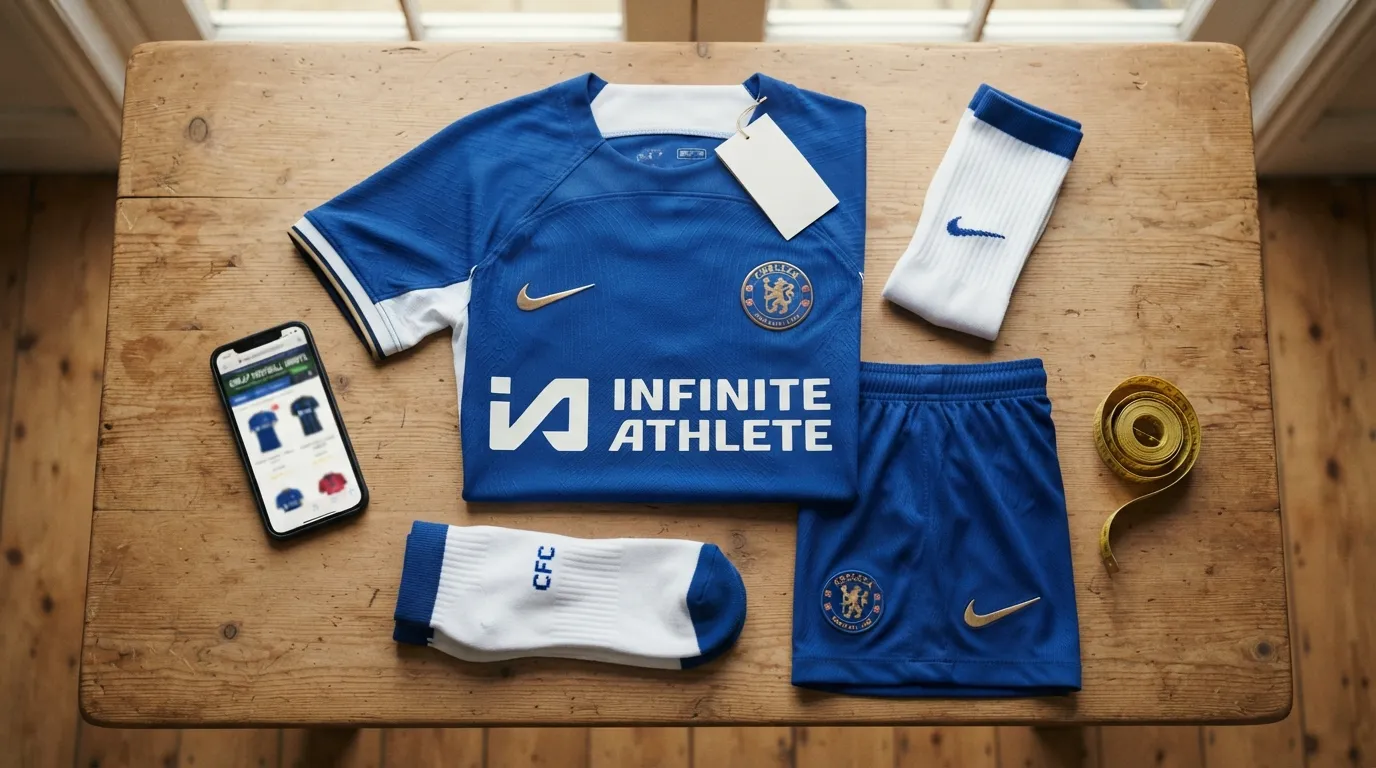
A supporter who has bought the blue every season for a decade has learnt the whole market without meaning to, and the lessons transfer to any club’s shirt. cheap football shirts follow one calendar across the division, change shirts reduced in late autumn, the home after Christmas, printed stock of departed players cleared after each window, everything from the outgoing season at the next launch, and a Chelsea fan has watched that calendar work on their own shirt long enough to know where every other club’s bargains fall too. The blue has one extra lesson: a club with high squad turnover produces more printed clearance than any other, and that lesson is worth money on every shirt in the league.
Here is the market, as a Chelsea supporter already knows it.
The calendar the blue taught
The home shirt launches in summer at the recommended price and holds it until after Christmas. The away and third reduce first, in late autumn, because they sell slowest. Printed shirts of players who have left clear after each transfer window at the deepest discount a current shirt reaches. Everything from the outgoing season goes to clearance when the new kit launches. A Chelsea fan who has bought a change shirt in November and the home in January knows the dates by heart, and they are the same dates for every club dressed by the same handful of suppliers.
Which Chelsea designs have been worth buying across the eras, the shirt this calendar has been applied to for years, is in retro Chelsea shirts: the kits that defined each era.
Why does Chelsea’s turnover make the blue cheaper?
Because every departure strands printed shirts. A replica printed with a squad name in August is unsellable at the recommended price the day the player leaves, and Chelsea has had more departures per window than most clubs for years. After each window the specialists and the club store clear those shirts harder than anything, and there are more of them in more sizes than at any other club. A Chelsea fan who does not mind a departed name has had current kit at a fraction of launch price twice a year, reliably, for as long as they have been buying.
The lesson for every other club’s shirt is the same: printed stock after a window is the deepest genuine discount on a current shirt, and the clubs with the most turnover have the most of it. A fan who checks the specialists in the week after each window, for any club, finds it.
What a genuine bargain looks like
Last season’s shirt at the launch, in whatever sizes are left: the same knit, the same crest, a different sponsor nobody reads. The change shirt in late autumn, usually a dark colour that hides a long day. A printed shirt after a window. A goalkeeper shirt at mid-season, which nobody buys at the recommended price and every retailer reduces. Each has a reason, a date and a seller who photographs the label.
A current-season home shirt at a fraction of retail in September, in every size, with a render, has no reason and no date, and a Chelsea fan who has seen a copy’s royal blue step at the shoulder seam knows what that price buys. The genuine shade, and how it has changed, is in Chelsea blue: how the colour changed.
The versions, as a Chelsea fan knows them
The replica, medium-weight knit, leisure fit, embroidered lion with a soft backing, for the stand and the road. The authentic, lighter, slimmer, a full size smaller, heat-applied lion, for the seat and the summer, and usually at clearance at the next launch below a current replica’s price. The long-sleeve, rarely stocked and cheap at summer clearance. The goalkeeper’s, long-sleeved and padded and never royal blue, the cheapest current shirt most of the year. Every club’s range has the same tiers at the same relative prices, because the same suppliers make them.
What the blue hides and shows
Royal blue hides a dark base layer and most of a long day, shows fading from sun and heat, and sits between the pale shirts that show everything and the navy ones that hide it. A Chelsea fan who has washed the blue cold, inside out and out of the sun for years knows the care routine every saturated shirt needs, and knows that a white or sky-blue shirt bought for the household needs a stricter one, and a navy one a looser one.
Buying for a mixed household
Most Chelsea supporters live with someone who supports someone else, and buy shirts for them. The calendar is the same: the rival’s change shirt in late autumn, the rival’s home after Christmas, the rival’s printed stock after a window, from the same specialists, who carry every club and reduce them together. The checks are the same too: the seller’s own photographs, a label with a composition and a product code, a named season. The only thing that changes is the colour’s care routine.
Where the bargains actually are
The specialist football shirt retailers carrying every club, who reduce by season rather than by badge and photograph the label as a matter of course. The club store at its own clearance and after each window, and Chelsea’s, with its printed pile, more than most. Marketplaces for end-of-line stock from sellers who name the season and show the shirt. Never the club shop at the ground before kick-off at full price, and never a render.
The lesson, applied to any shirt
Wait for the date. Buy the change shirt in late autumn, the home after Christmas, the printed shirt after the window, last season’s at the launch, the goalkeeper’s at mid-season. Check the label and the dye. Wash it cold and out of the sun. A Chelsea fan has done all of that for the blue for years; the kit as a set, shirt, shorts and socks, and when each piece reduces, is in cheap football kits: the set, as a Chelsea household buys it.
What does a Chelsea fan do differently from a first-time buyer?
Waits, measures and asks for photographs, three habits a first-time buyer has not formed yet. The fan waits for the date, because the blue has taught them that every shirt in the division is reduced on a calendar and that launch week is the one week nothing is. The fan measures from the drawer, because a shirt they already own, laid flat and measured across the chest in centimetres, is a better size chart than any letter, and the number transfers to any club in the same supplier’s knit. And the fan asks for photographs, the label, the crest, a sleeve across the body in daylight, because a listing’s words say genuine and its photographs show whether it is.
A first-time buyer pays the recommended price in August for a shirt that will be a third cheaper by January, orders a letter and sends it back, and reads a listing’s description instead of its pictures. A Chelsea fan who has bought the blue a dozen times does none of that without thinking, and does the same for a rival’s shirt bought for the household, the same dates, the same measurement, the same three photographs, with the rival’s crest in the frame instead of the lion. The habits cost nothing and save more than any discount code, and the blue taught them for free.
Frequently asked questions
When is any club’s shirt genuinely cheap?
Change shirts in late autumn, the home after Christmas, printed stock after each window, everything at the next launch, goalkeeper shirts by mid-season.
Why is the Chelsea shirt cheaper than most?
High squad turnover strands more printed shirts after each window, cleared harder than anything. The same logic applies to every club, scaled to its turnover.
What does a copy look like at Chelsea’s price?
A current home at a fraction of retail in September, in every size, with a render, and a royal blue that steps at the shoulder in daylight.
Does the calendar work for a rival’s shirt?
Identically. The same suppliers, the same specialists, the same dates. Only the colour’s care routine changes.



2 responses