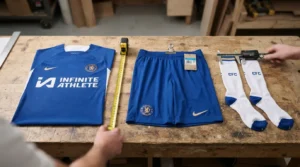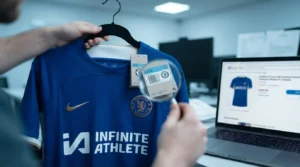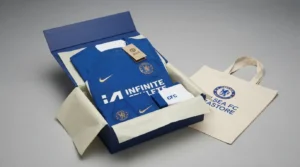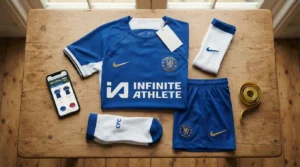
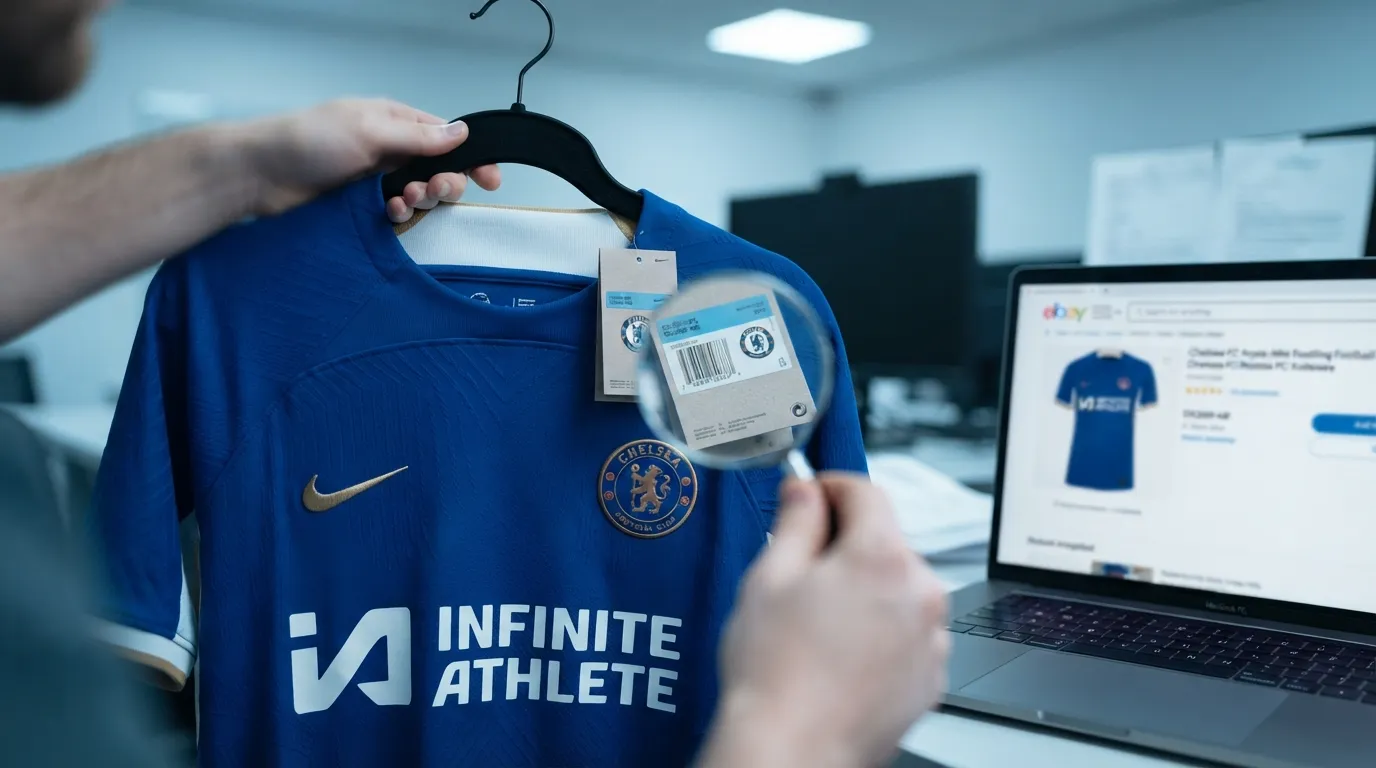
Nobody at Stamford Bridge has ever called it a jersey, and when the word turns up in front of a Chelsea supporter it is a signal about the seller, not the shirt. cheap football jerseys is how listings written outside Britain describe the product, North American retailers, Asian marketplaces, the wholesale catalogues copy operations buy from, and a UK buyer who meets it is looking at either a genuine overseas retailer pricing for another market or a copy operation using its catalogue’s vocabulary. A Chelsea fan who has handled the genuine blue for years has everything needed to tell which: the price against the recommended figure, the label against the one in their own drawer, the royal blue against the shade they know.
Here is the word, and what to read against it.
Why the word matters
The club, the supplier’s UK catalogue, the club store and every UK specialist say shirt. Jersey belongs to another market’s vocabulary, and a listing in it was written from that market’s template, a genuine retailer abroad, shipping to the UK, or a copy whose text came with the stock. Neither is a verdict. The word is the cue to read the rest of the listing against what a Chelsea fan already knows a genuine shirt looks like.
What a Chelsea fan already knows about the calendar and the checks is in cheap football shirts: what a Chelsea fan already knows.
The price against the recommended figure
A Chelsea fan knows the blue’s recommended price and the dates it comes down from it: a third off the change shirt in late autumn, the home after Christmas, printed stock after a window, everything at the launch. A jersey listing’s price is read against that: a plausible reduction on a plausible date is a specialist’s or a foreign retailer’s; eighty per cent off a current home in September is nobody’s reduction and is the price of a copy’s fabric. The same arithmetic applies to any club’s shirt, because the same suppliers set the same recommended prices.
The label against the one in the drawer
Every genuine shirt from any country carries the supplier’s wash label, composition, country of manufacture, a product code in the supplier’s format, a care sequence in several languages, and a Chelsea fan has a drawer full of them to compare against. A jersey listing’s label photograph either matches the one in the drawer or does not; a copy’s is short, in one language, missing the composition, with a code that fits no format. A seller who will not photograph the label has answered.
Why is the royal blue the Chelsea fan’s own check?
Because a supporter who has owned the blue for years knows the shade better than any listing can fake it. A genuine shirt is dyed as one yardage and body, sleeves and collar match exactly in daylight; a copy is assembled from panels dyed separately and shows a half-shade step at the shoulder, and its hue drifts purple under one light and cobalt under another. A Chelsea fan asks any seller for a daylight photograph with a sleeve laid across the body and compares it to the shirt they own. For a rival’s shirt in another colour the same test applies, a red that drifts orange, a sky blue that drifts green, and the fan who has run it on the blue runs it on anything. How the club’s blue has shifted across the decades, and what the current shade is, is in Chelsea blue: how the colour changed.
The genuine overseas jersey
Plenty of jersey listings are exactly what they claim: a genuine retailer abroad, selling the club’s shirt reduced on its own market’s calendar, which may be months ahead of Britain’s. The blue may be cheaper in a European autumn sale while UK retailers hold it; a size sold out at home may be in stock abroad. For a fan who can size exactly, the half-chest in centimetres from a shirt they own, against the chart for the version, and verify from a screen, it is a real source. Import charges go in the price; a return costs international postage; printing abroad is frequently a reprint, so the shirt comes plain.
The copy in catalogue clothing
The same render across clubs with the colour changed, a title listing every club and season, no composition or origin in the description, every size available, no label photograph, a returns address that is a depot or absent. A Chelsea fan reads a jersey listing for those six and, finding two or more, closes it. The genuine blue has never been sold that way by anyone.
Buying the rival’s jersey for the household
The same checks for the partner’s or child’s club, price against the recommended figure, label against the genuine format, dye photographed in daylight, the catalogue tells, from the same seller, on the same calendar. A Chelsea fan who has sorted jersey listings for the blue sorts them for any colour. The only addition is knowing the rival’s shade well enough to spot the drift, which the club store’s image at full size supplies.
The word, read twice
Once to notice where the listing came from; once to read the rest of it against what a Chelsea fan already owns. Price, label, dye, returns address, a listing that passes is the club’s shirt from another market, cheaper for a reason; one that fails is a copy, whatever it is called. The kit as a whole, piece by piece, and which pieces copies bother with, is in cheap football kit: which pieces a Chelsea fan checks and which they don’t.
How does a fan tell a genuine foreign retailer from a copy listing?
By what the seller has and what the seller shows. A genuine overseas retailer has stock, and photographs it: the actual shirt, the label with its composition and code, the sleeve laid across the body, the inside of the collar. Its range looks like a shop’s, one market’s clubs, a season or two, sizes that thin where stock has sold, and no two listings share an image. Its returns page states a policy with an address and a timeframe, and its import charges are stated or confirmed on request. It says jersey because that is its market’s word, and everything else about it is a retailer.
A copy operation has a catalogue, and shows it: the same render across clubs with the colour changed, every club and season in the title, every size available, no label photograph, a returns address that is a depot or nothing, and no answer about charges because the item will be declared at a value no genuine shirt has. It says jersey because the catalogue does, and everything else about it is a catalogue. A Chelsea fan who has bought the blue from a genuine German specialist and closed a dozen catalogue listings in the same evening knows the difference in a glance, and applies it to a rival’s jersey for the household in the same glance.
Frequently asked questions
Does jersey in a listing mean a copy?
No, it means the listing was written from an overseas or wholesale template. A genuine foreign retailer uses it too. Read the price, label and dye against what you own.
What is the Chelsea fan’s own check?
The royal blue: a sleeve across the body in daylight, matched across panels and the right shade. A copy steps at the shoulder and drifts purple or cobalt.
Can an overseas jersey be cheaper than the UK?
Yes, when the shirt has cleared abroad first. Add import charges, size exactly, buy plain.
Does the method work for a rival’s shirt?
Identically. Price, label, dye against the club store’s shade, and the catalogue tells.